EN
EN

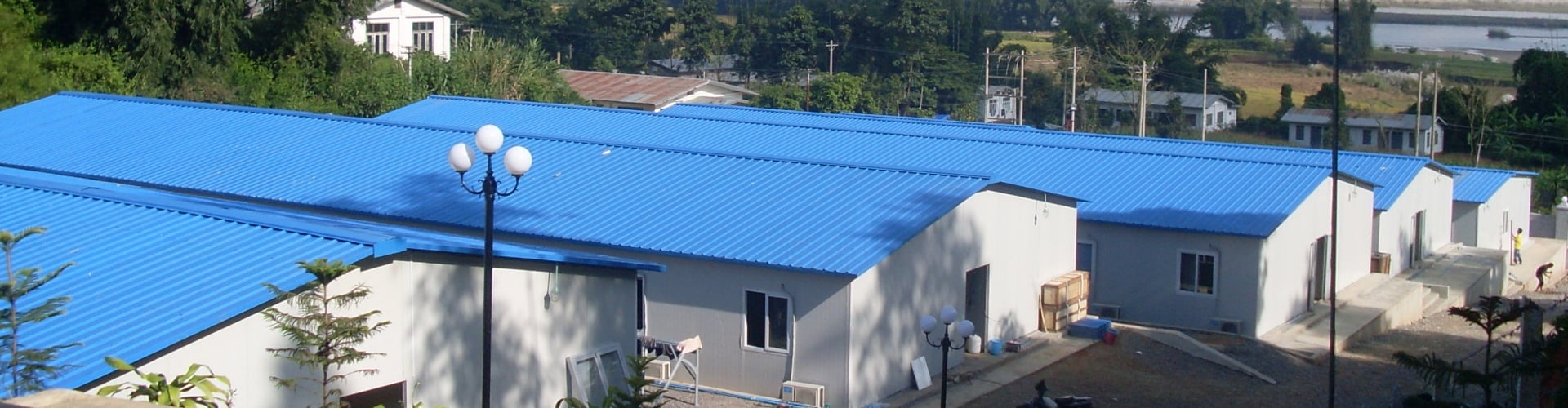
Modular Worker Camp for Mining Projects: The 2026 Complete Guide for EPC Contractors
A modular worker camp is the fastest and most cost-controlled way to house, feed and support your mining workforce. Because prefab modules are manufactured in the factory while roads and foundations are built on site, a complete camp goes live 50–70% faster than conventional construction — a decisive advantage when production start-up dates and EPC liquidated damages are at stake.
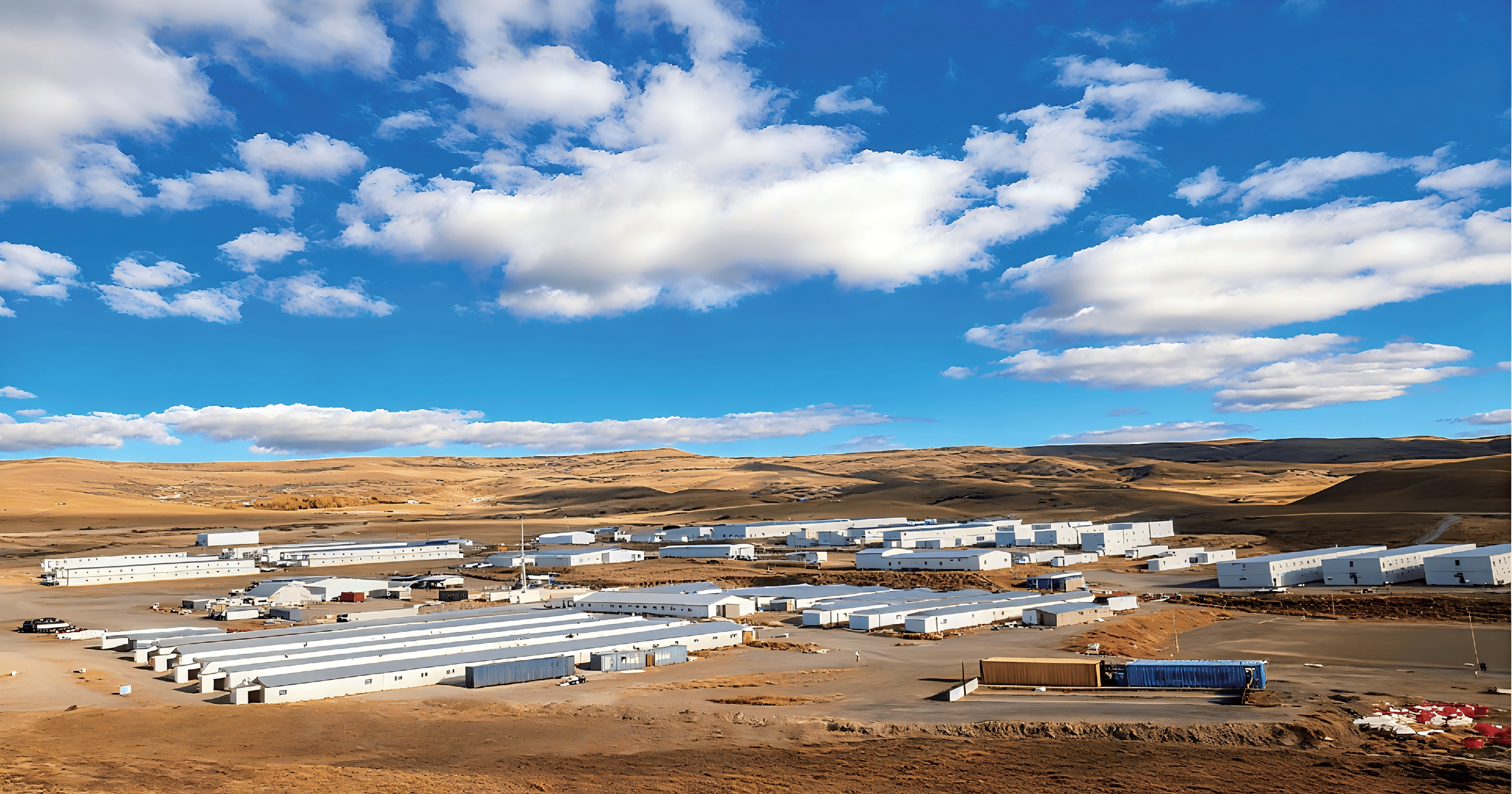 A turnkey modular mining camp: accommodation, canteen, offices and recreation units delivered as one coordinated package.
Key takeaways
- Modular camps cut project accommodation timelines by half or more by running factory production and site works in parallel.
- Engineered specifications handle -55°C arctic cold, 50°C+ desert heat, high-altitude UV and C4/C5-M coastal corrosion.
- One supplier covering design, manufacture, logistics and installation removes the biggest hidden cost in remote projects: interface risk.
Why Remote Mining Projects Need Modular Camps
Mining, oil & gas and infrastructure megaprojects are increasingly located hundreds of kilometres from the nearest town. Traditional site-built accommodation struggles on three fronts that matter most to contractors: schedule, cost certainty and workforce retention.
Conventional construction in remote areas depends on local labour that usually does not exist, material supply chains that break down at the first rainy season, and a build sequence that cannot start until the site is fully prepared. Modular construction inverts that logic: up to 90% of the building work happens in a controlled factory environment, shipping completed units to site where they are craned onto prepared foundations.
Speed: Factory Production Meets Fast Site Installation
Schedule is where modular camps outperform every alternative. Because modules are produced off site, a 500-person camp can typically be delivered in the following rhythm:
| Phase | Typical Duration | Runs in Parallel With |
| Camp layout & engineering design | 2–3 weeks | Site survey, permits |
| Factory manufacturing | 3–5 weeks | Foundations, utilities, roads |
| Flat-pack shipping | 3–6 weeks (varies by destination) | Continued site preparation |
| On-site assembly & commissioning | 2–4 weeks | Mobilisation of workforce |
The result: from contract signature to first workers sleeping on site in as little as 10–14 weeks, even in landlocked or island destinations. For a gold or copper project where each week of delay on the mine plan translates into seven-figure losses, that acceleration alone justifies the modular approach.
Cost Control: Predictable Budgets in Unpredictable Places
Remote project budgets are routinely destroyed by local labour inflation, rework and weather downtime. Factory-built modular units transfer most of that risk away from your project:
- Fixed factory pricing — the unit cost is locked before shipping, insulated from local labour market volatility.
- Less skilled labour needed on site — installation crews of 20–30 can erect a full camp, compared with the workforce a conventional build demands.
- Flat-pack logistics — one 40-ft container carries enough modules for 3–4 complete room units, cutting sea-freight cost per bed dramatically.
- Relocatable assets — when one mine phase ends, the camp moves to the next site instead of being written off.
Contractors comparing total cost of ownership — not just sticker price — typically find modular camps 20–40% cheaper per bed than permanent site-built dormitories once schedule and logistics are included.
Built for Extremes: Cold, Heat, Altitude and Salt Air
The real test of a mining camp is not the brochure photo — it is month 18 of operation at 4,500 m elevation or on a monsoon-battered coastline. Specification decisions made at design stage determine whether your camp performs or deteriorates:
| Environment | Engineering Response |
|---|---|
| Arctic / subarctic (to -55°C) | Upgraded insulation cores (100–150 mm rock wool/polyurethane), triple-sealed window systems, heated entry vestibules, cold-rated steel and seals |
| Desert (50°C+, sandstorms) | Reflective roof systems, enhanced HVAC capacity, dust-sealed envelopes, UV-stable exterior coatings |
| High altitude / high UV | UV-resistant paints and membranes, oxygen-supply-ready HVAC design for camps above 4,000 m |
| Coastal / offshore-adjacent (C4/C5-M) | Hot-dip galvanised or Zn-Al-Mg coated steel structures, marine-grade epoxy coating systems, stainless fasteners |
CDPH engineers every camp against the specific climate map of the project location, offering validated solutions for extreme cold to -55°C, desert heat, high plateaus and C4/C5-M anti-corrosion coastal zones — so the same building philosophy works whether your project is in Mongolia, the Gulf, the Andes or West Africa.
What a Complete Camp Includes
A well-planned modular camp is a small, functioning town. The standard CDPH delivery scope covers every function your workforce needs on a single, coordinated layout:
- Worker dormitories — single, double or four-bed units with lockers, HVAC and en-suite or shared wet modules
- Management and site offices — open-plan or cellular offices, meeting rooms and control rooms
- Kitchens and canteens — stainless steel kitchen modules, dining halls sized for shift rotation
- Recreation and welfare — activity rooms, gyms, TV lounges, laundry and prayer rooms
- Warehouses and workshops — clear-span steel structure buildings for spare parts, equipment and maintenance
- Utilities — water treatment, sewage modules, generator rooms and power distribution
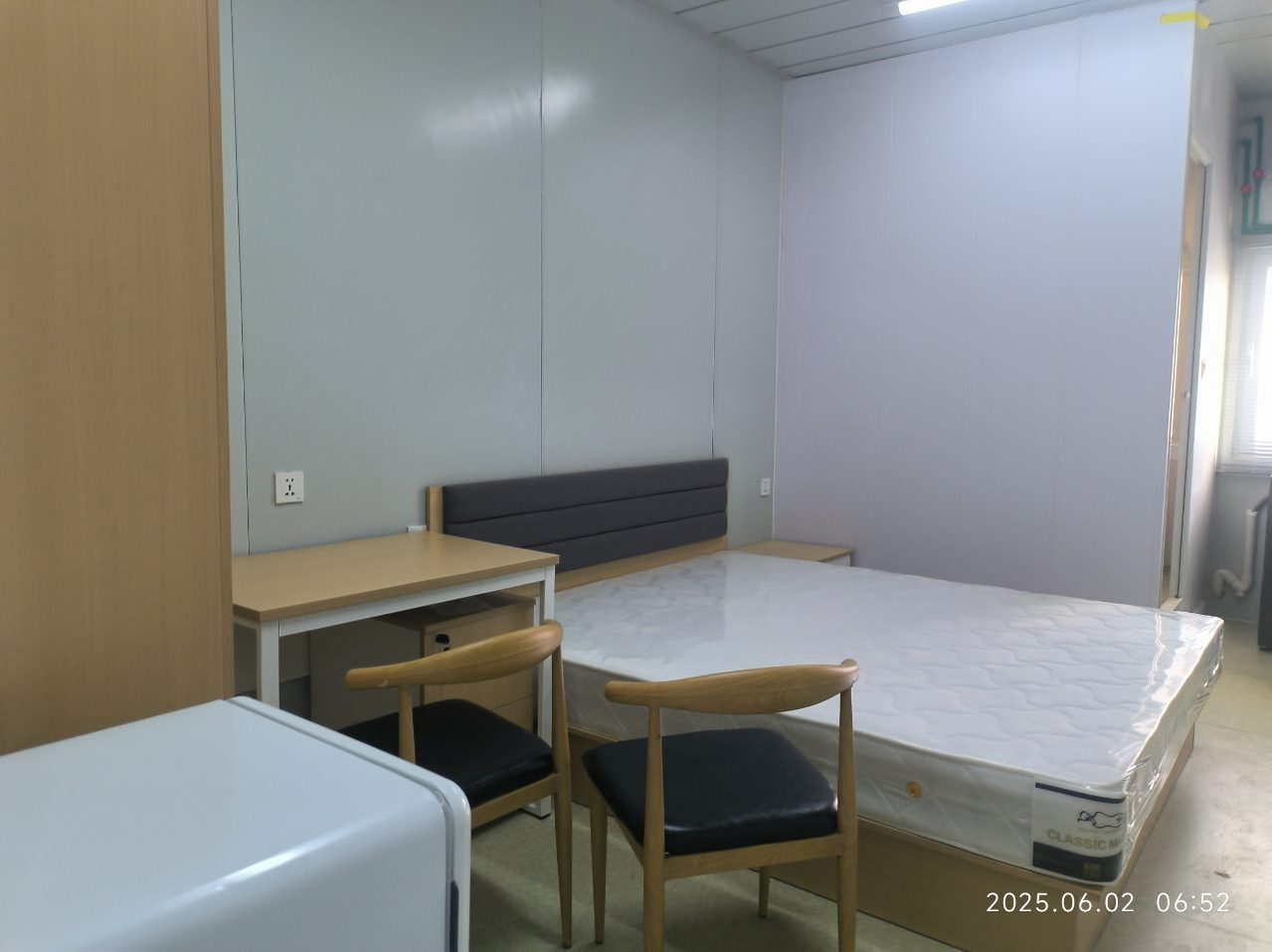 Worker dormitory interior: durable steel-frame construction with hotel-level comfort standards improves retention and morale.
Design Capability: Why Camp Planning Is Not a DIY Job
The difference between a camp that works and one that generates complaints is planning. CDPH's team of 100+ professional designers delivers full camp master planning — density studies, wind and snow-load engineering, fire escape analysis, canteen flow design and utility sizing — before a single module is manufactured. This front-loaded design capability is what allows 3 large smart production factories to then fabricate the entire camp against a frozen, coordinated drawing set, eliminating the change orders that plague mixed-supplier projects.
Proven Track Record: 5,000+ Projects, 100+ Countries
Supplier risk is the quiet threat in every remote project. If your camp supplier has never shipped to your country, never handled your climate, never cleared your customs regime — you are funding their learning curve. CDPH has delivered more than 5,000 projects across 100+ countries, from African mining concessions to Middle East energy camps and South American infrastructure sites, with references across the exact project categories this article addresses. That delivery history means established shipping lanes, pre-built compliance documentation and installation teams experienced in the environments you operate in.
About CDPH: CDPH is a global supplier of modular houses, prefab houses and steel structure buildings for mining, energy, industrial and infrastructure projects. With 3 large intelligent production factories, 100+ professional designers, and a track record of 5,000+ projects in 100+ countries, CDPH delivers turnkey workforce camps engineered for extreme environments — from -55°C arctic sites to C4/C5-M coastal zones.