EN
EN

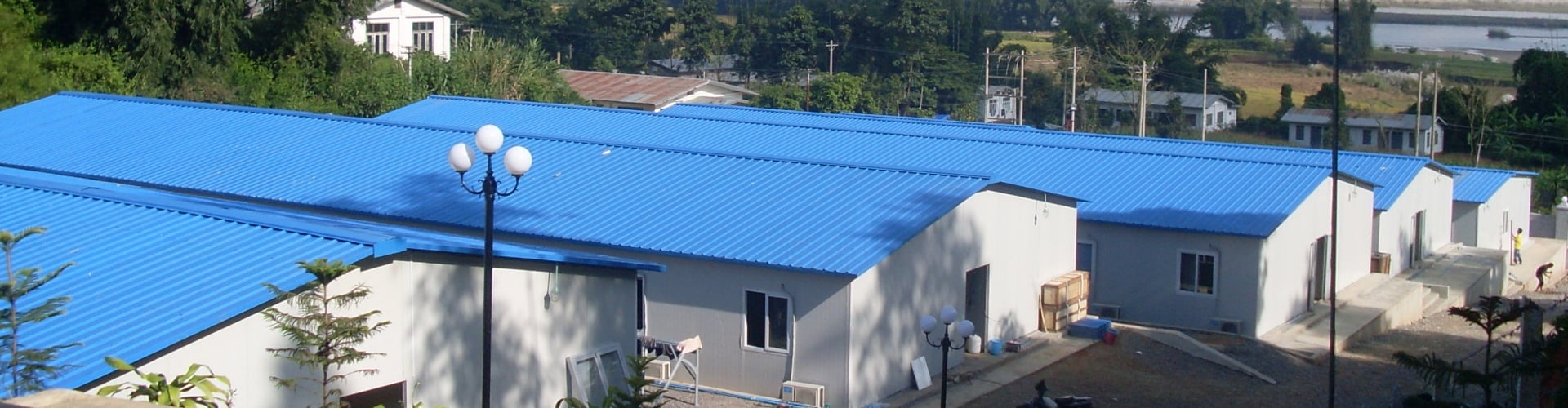
Coastal Labour Camp Construction: C4/C5-M Modular Accommodation for Oil, Gas and Marine Projects
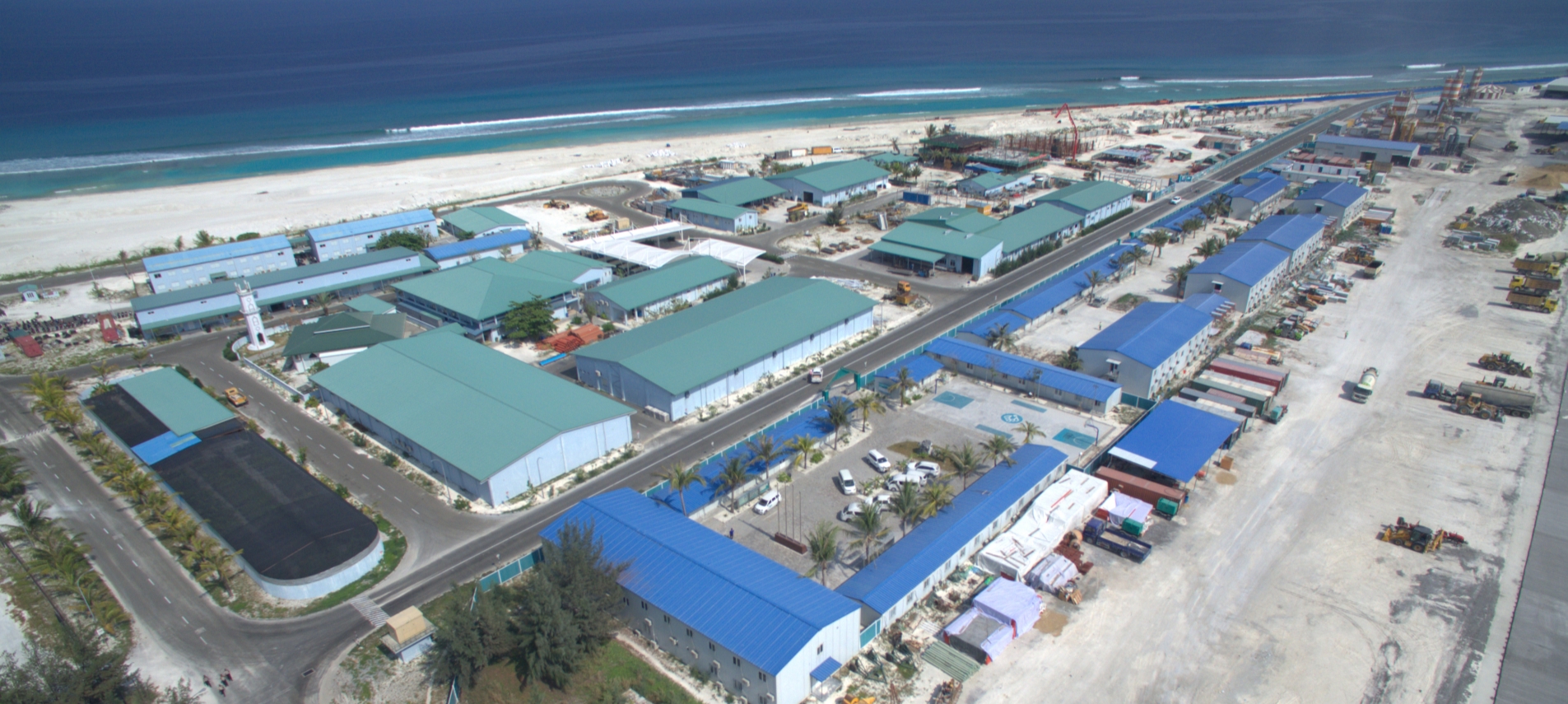
Ports, LNG terminals, refineries, desalination plants and island airports all share one uncomfortable truth: the closer a project sits to the sea, the faster its camp falls apart. Standard labour camp construction that performs perfectly inland can start shedding paint, rusting fasteners and leaking roofs within the first two rainy seasons on a coastal site.
For an EPC contractor, that means mid-project dormitory repairs, a disgruntled workforce, and schedule risk at the worst possible moment. The solution is not "more steel" — it is the right specification. A C4/C5-M modular accommodation camp is engineered from the frame coating upward for salt-laden air, high humidity and, on oil and gas fields, chemically aggressive atmospheres.
In this guide, we break down what C4/C5-M actually means, how a properly specified camp is built, what a full coastal camp includes, and how fast it can be delivered — based on CDPH's experience delivering worker accommodation camps in more than 100 countries.
1. Why Coastal and Oilfield Camps Fail Early
Salt is the enemy of every building component: chloride ions penetrate coatings and attack steel, humidity keeps surfaces wet for hours after each spray cycle, and on refinery or petrochemical sites, H2S and chemical vapours add a second attack layer. Failures follow a predictable pattern:
|
Failure mode |
Root cause |
What it costs the contractor |
|
Paint blistering and delamination on walls and roofs |
Standard coatings not rated for high-salinity coastal air |
Repainting typically every 1–2 years; downtime in occupied dormitories |
|
Rusting fasteners, hinges and door hardware |
Non-stainless or lightly plated fixings |
Door and window failures; safety complaints |
|
Sandwich panel edge corrosion and core exposure |
Cut panel edges left unsealed; thin-gauge skins |
Thermal bridging, mould, panel replacement mid-project |
|
Settlement and cracking on soft coastal soils |
Foundations designed for inland ground conditions |
Floor distortion, water ingress, re-levelling costs |
Corrosion is not a niche problem — the NACE IMPACT study estimated its global cost at US$2.5 trillion per year, roughly 3.4% of global GDP. Camps are rarely the line item where contractors plan for it, which is exactly why coastal camp accommodation so often becomes one.
2. What C4 and C5-M Actually Mean (ISO 12944-2)
The ISO 12944-2 standard classifies atmospheric corrosivity from C1 (very low) to C5 (very high), with CX for extreme offshore conditions and Im2 for permanent immersion. "C5-M" is the widely used designation for marine environments. Picking the right category is the single most important specification decision in coastal labour camp construction:
|
Category |
Environment |
Typical location |
Recommended for a camp at… |
|
C3 |
Medium: moderate SO2, low coastal influence |
Inland industrial zones |
Inland mining camps, factory sites |
|
C4 |
High: significant salinity from salt spray |
Coastal areas, shipyards, ports |
Camps within a few km of the coastline |
|
C5-M |
Very high: heavy salt spray, near-constant humidity |
Offshore platforms, exposed jetties, island sites |
Island projects, breakwaters, LNG jetties |
|
CX / Im2 |
Extreme: offshore with salt mist + immersion |
Splash zones, semi-submerged structures |
Specific structural elements by engineer's assessment |
A camp specifier should match the category to the worst local microclimate, not the average one — a dormitory block 300 metres from a breaking shoreline sees more salt cycles than a warehouse 1 km inland on the same project.
The same logic applies across the whole climate spectrum: the category that matters for a remote mining accommodation camp at altitude is frost and UV, for a desert energy camp it is heat and sand, and for a port-side industrial camp accommodation project it is chloride — which is why climate category should be the first line of every camp specification.
3. Full Camp Scope: More Than Dormitories
A camp is a small, self-contained town, and procurement teams evaluate suppliers on whether the whole town can come from one source. A complete turnkey workforce accommodation package for coastal and oilfield projects includes:
●Worker dormitories — modular dormitory buildings with single or multi-berth layouts, lockers and air conditioning
●Site offices and meeting rooms — modular site accommodation for project management and client teams
●Canteen and kitchen — stainless steel catering lines sized to the full camp population in multiple sittings
●Laundry, ablution and toilet blocks — sanitation ratio engineered to camp standards and local regulations
●Recreation rooms — gyms, TV rooms, prayer rooms and multipurpose halls, which measurably improve retention on long rotations
●Warehouses and workshops — steel structure buildings with clear-span interiors for spare parts and equipment
●Clinic / first-aid station — required on most remote energy and mining concessions
●Camp utilities — water treatment, sewage treatment, power distribution and fire systems engineered as one package
Because every module arrives as a finished box — wired, plumbed, coated and fitted — site work is limited to foundations, craning and hook-up, which is what makes camp construction schedules predictable even on remote island sites.
4. Delivery Schedule: 8–10 Weeks from Order to Handover
For most contractors, the decisive question is schedule: how long does it take to build a labour camp? Modular construction compresses the programme because factory production and site works run in parallel:
|
Phase |
Duration (500–2,000 person camp) |
Key activities |
|
Camp planning & engineering |
1–2 weeks |
Master plan, 3D design, utility sizing, permit drawings |
|
Factory production |
4–5 weeks |
Panel and frame fabrication, fit-out, quality inspection — parallel with site preparation |
|
Shipping |
2–4 weeks (varies by destination) |
Flat-pack or complete-module loading, container shipping |
|
On-site installation |
2–3 weeks |
Foundations, crane erection, MEP hook-up, commissioning |
Two things make this schedule credible rather than optimistic. First, production capacity: CDPH operates 3 large intelligent production factories, so a camp is never queued behind other customers' orders. Second, design capacity: 100+ professional designers produce the full camp master plan — dormitory densities, canteen flows, utility networks — during those first 1–2 weeks, instead of the four to six weeks a standalone drafting office typically needs.
5. Cost: Judge a Coastal Camp on 15-Year Total Cost, Not Unit Price
Coastal projects that buy on lowest unit price usually pay twice. A fair comparison for temporary workforce housing and permanent camps alike looks at the full ownership picture:
|
Cost factor |
Standard-spec camp |
C4/C5-M modular camp |
|
Initial price |
Lower |
Moderately higher (corrosion package) |
|
Repainting / recoating cycle |
Every 1–2 years on coastal sites |
Typically none required within the first service decade |
|
Panel and hardware replacement |
Frequent from year 2–3 |
Rare; components replaced only at damage, not corrosion |
|
Camp downtime for repairs |
Occupied-room disruption |
Minimal |
|
Residual value |
Low after coastal exposure |
High — units relocate to the next project with structure intact |
The relocation point deserves emphasis. Because CDPH modules are bolted rather than welded to their foundations, a camp built for one coastal project phase can be dismantled and re-erected for the next — turning what looks like temporary accommodation into a reusable asset on the contractor's balance sheet.
Specification claims are cheap; references are not. CDPH worker accommodation camps are operating on coastal and tropical project sites across the Caribbean, the Indian Ocean, West Africa, South America and the Gulf:
- Maldives — modular camp accommodation for an international airport expansion project, on an island site a few hundred metres from open ocean
- Cuba — prefabricated labour camp buildings for a coastal oil and gas geophysical exploration campaign
- Barbados — modular worker accommodation for a hotel construction project in the Caribbean trade-wind salt zone
- Guyana — prefabricated accommodation units for a coastal energy-sector project camp
- Angola — a tropical power-plant workforce camp on raised foundations in a high-humidity, high-salinity Atlantic coastal environment
Across more than 100 countries and 5,000+ delivered projects, the same engineering platform covers the full climate spectrum — -50°C extreme cold, desert heat, high plateau, and C4/C5-M coastal corrosion — so a contractor who standardizes on one camp system can deploy it from a Saharan solar farm to a Southeast Asian refinery without re-engineering.Modular camp accommodation rows for a thermal power plant workforce.
6. Why Contractors Choose CDPH
- 3 large intelligent production factories — capacity headroom that protects your camp schedule, with batch-to-batch coating and welding consistency that manual shops cannot hold
- 100+ professional designers — complete camp master planning, from dormitory density and canteen throughput to utility and fire systems, not just box drawings
- 100+ countries, 5,000+ projects delivered — references on island, coastal, desert, arctic and high-plateau sites
- Extreme-environment engineering as standard — C4/C5-M marine corrosion packages, -50°C cold packages, desert and high-plateau packages selectable per project
- Full-camp scope from one supplier — dormitories, offices, canteens, laundries, recreation rooms, warehouses, clinics and utilities, factory-finished and site-ready
Frequently Asked Questions
What does C4/C5-M corrosion protection mean for a labour camp?
C4 and C5-M are corrosivity categories from ISO 12944-2. C4 covers coastal air with significant salt spray; C5-M covers heavy marine exposure such as exposed jetties and island sites. A C4/C5-M rated camp combines hot-dip galvanized frames, marine-grade coating systems and sealed sandwich panels to deliver 15+ years of service in salt-laden air.
How long does it take to build a coastal labour camp?
A turnkey modular camp for 500–2,000 workers typically takes 8–10 weeks from order to handover: 1–2 weeks of camp planning and engineering, 4–5 weeks of factory production running in parallel with site preparation, and 2–3 weeks of installation and commissioning, plus shipping time to the destination.
How much does modular workforce accommodation cost per person?
Price depends on occupancy density, climate specification and amenities such as canteens, laundry blocks and recreation rooms. Coastal projects should budget for the C4/C5-M package: a modest premium at purchase that eliminates the repainting and panel-replacement cycle that dominates coastal camp operating costs.
Can modular labour camp buildings be relocated and reused?
Yes. Modules are bolted, not welded, to their foundations, so a camp can be dismantled and re-erected on the next project phase with the large majority of components reused — preserving residual value that site-built temporary housing loses entirely.
What facilities should a worker accommodation camp include?
A complete camp includes worker dormitories, site offices, canteen and kitchen, laundry and ablution blocks, toilets and showers, recreation rooms, a clinic, warehouses and prayer or multipurpose rooms, supported by engineered water, sewage, power and fire systems.
Get a C4/C5-M Camp Design and Quotation
If you are building a camp for a port, LNG, refinery, desalination or island project, send us the headcount, site location and target mobilization date. CDPH's design team will return a complete camp master plan, C4/C5-M specification and delivery schedule — typically within one week. Talk to a camp specialist today and keep your workforce housed before your first pour.